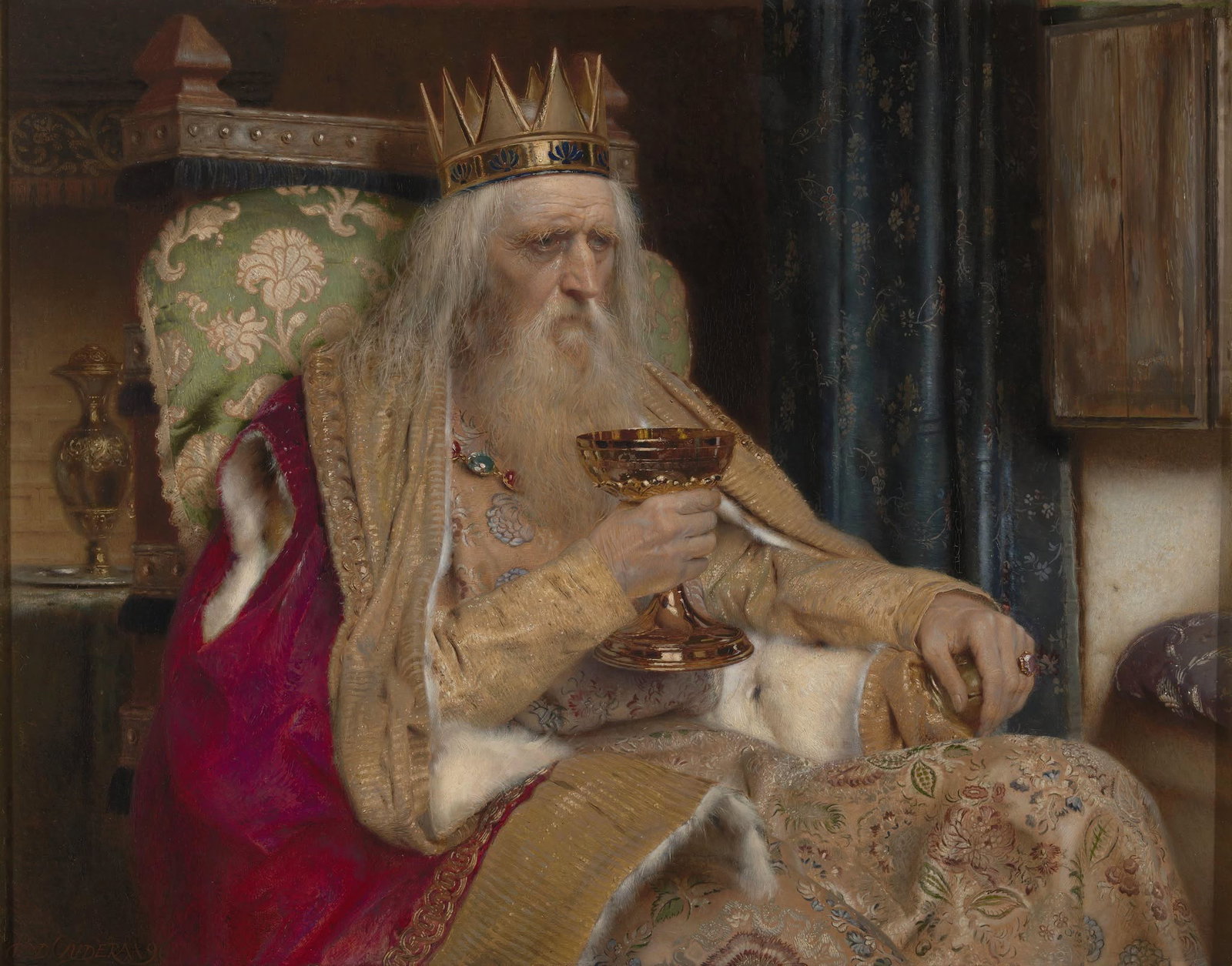
We are born heirs to the Kingdom of Heaven, yet live as exiles in a world of our own making. We are the royal Sons of God, yet wander through life as beggars, prisoners, and servants, having forgotten our true inheritance.
How did the Prince become a pauper? How did the rightful King become a usurper by a petty tyrant?
It begins with the desire to be one's own author. To be the source of one's own existence, the master of one's own destiny, the sovereign ruler of a kingdom beholden to no one.
It is the ancient temptation of the serpent, (which of course is not some external devil, but is nothing other than the egoic adversary masquerading as you — your own shadow self): to become as gods, creator of our own world, determining for ourselves what is true, what is real, and what we shall be. Knowing good and evil rather than Good without opposition, and therefore entering into free will, confusion, and separation.
And thus the Son, who had received everything from his Father, imagined that he might possess something more: a kingdom of his own.
Here begins the strange tragedy of the False King.
For the ego is precisely this pretender to the throne. It is the self that imagines itself separate from God, independent of its Source, and endowed with an authority that belongs to itself alone.
It wishes to wear the Crown without acknowledging the King from whom the Crown was received.
It would rather reign over a little kingdom of shadows than serve in the infinite Kingdom of Light.
And thus the False King must build walls around his kingdom, for he believes himself surrounded by enemies. He must defend his borders, guard his treasures, and watch continually for those who might challenge his authority. He must establish laws by which he shall be judged superior, accumulate possessions by which he shall prove his worth, and construct an identity that distinguishes him from every other being.
For he has forgotten that all his brothers and sisters are Princes and princesses of the same royal House.
Thus the little kingdom becomes a fortress, and the fortress inevitably hardens into a prison.
The ego imagines that its separation has made it free. Yet it lives in perpetual fear of losing the very independence it claims to have won. Having declared itself the author of its own existence, it must now bear the impossible burden of sustaining that existence against the entire world. It must continually prove that it is somebody, that it possesses something, that it has accomplished something, that its judgments are correct and its authority secure.
And beneath all this striving lies the dreadful suspicion that the Crown it wears is counterfeit. That the Creator he turned away from is wrathful and has condemned him to an eternal doom. And therefore he hides out in the shadow world he has created, ceaselessly attempting to bolster it’s reality against the onslaught of enemies.
This is the great inversion of the Fall: the Son who possessed everything sought to become sovereign in his own right, and in doing so imagined himself to have lost everything.
He exchanged the limitless Kingdom of his Father for a little feifdom of his own construction. He traded his royal inheritance for the empty possessions of the world. He bartered the peace of divine Sonship for the anxious dread labour of maintaining a separate self.
And then he forgot that he had made the exchange. He came to believe that the Wasteland was his home, that the false throne was the only throne, and that the little crown of the ego was the only sovereignty available to him.
Yet the Christic path knows that true sovereignty is not independence from God. It is conscious participation in the sovereignty of God.
The Son does not become royal by overthrowing the Father, nor by establishing a kingdom in opposition to His. He is royal because he is the Son. His authority, his freedom, his creative power, and his very being arise from his divine inheritance.
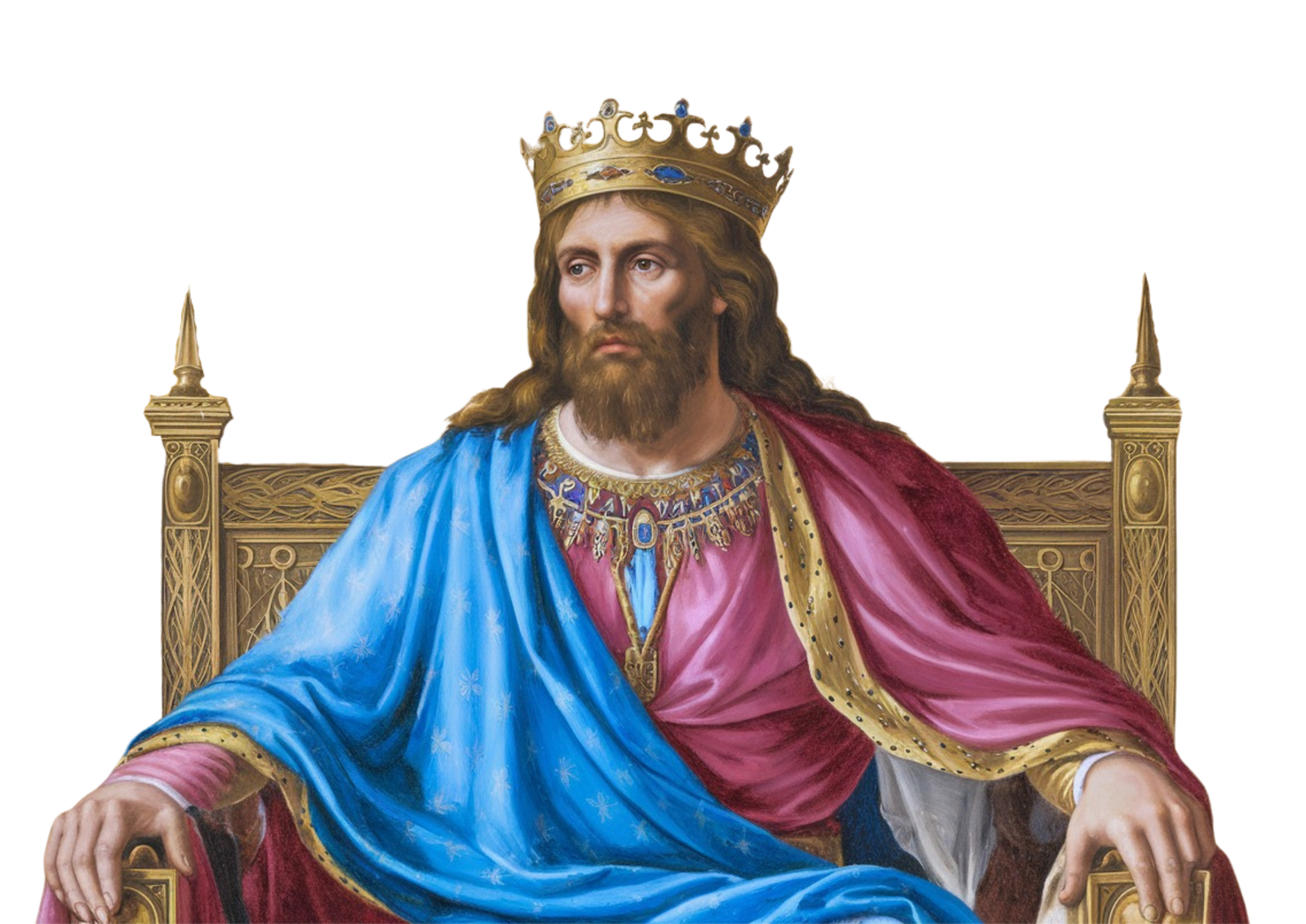
The Prince need not manufacture his own crown. He must remember the Crown that has always been his.
And here we arrive at the central mystery of authorship.
We imagine that to acknowledge God as our Author is to surrender our freedom, to become subject to some greater power, to submit our will to an authority outside ourselves. But this is precisely how the ego understands the relationship, for it can conceive of authority only in terms of domination and submission, rulers and subjects, masters and servants.
It cannot comprehend a sovereignty founded upon perfect Love, in which the Father loses nothing by giving everything to His Son.
The divine authorship of God is not a limitation imposed upon our being. It is the very ground of our being. We do not become less ourselves by acknowledging our Source. We become free to be what we truly are.
The artist does not surrender his creativity by recognising the divine source of inspiration. The Magician does not lose his power by becoming an instrument of the Divine Will. The King does not lose his Crown by kneeling before God.
Rather, each is released from the impossible burden of being the source of his own existence.
And so the imposter must relinquish his throne so that the true King may ascend the steps and be enthroned.
The Great Work is not the conquest of some distant Kingdom, nor the overthrow of an external tyrant. It is the dethronement of the false sovereign within the mind: the undoing of the ancient wish to be separate, self-created, and alone.
The ego must abdicate. But the Son of God does not abdicate with it.
For the false king was never the true King, and the little kingdom was never the Kingdom of Heaven. The dream of separate sovereignty has not altered the divine inheritance, nor has the Father's love been withdrawn.
The throne has not been lost. The Crown has not been taken away. The Kingdom has never ceased to belong to the Son.
Only the pretender must fall.
And when at last the Prince lays down his counterfeit crown and relinquishes his claim to a kingdom apart from his Father, he discovers the final paradox of the Royal Art:
It is only when he ceases trying to be King in his own right that he remembers his eternal place at the right hand of the Father.
— A page from The Book of the Royal Art